How I Wrote Volume 3 of The UnNoticed Entrepreneur From a Podcast
The exact stack and workflow I used to turn 50 podcast interviews into a Wiley-published book — Descript, SwellAI, Perplexity, ChatGPT, Canva and Designrr.io.
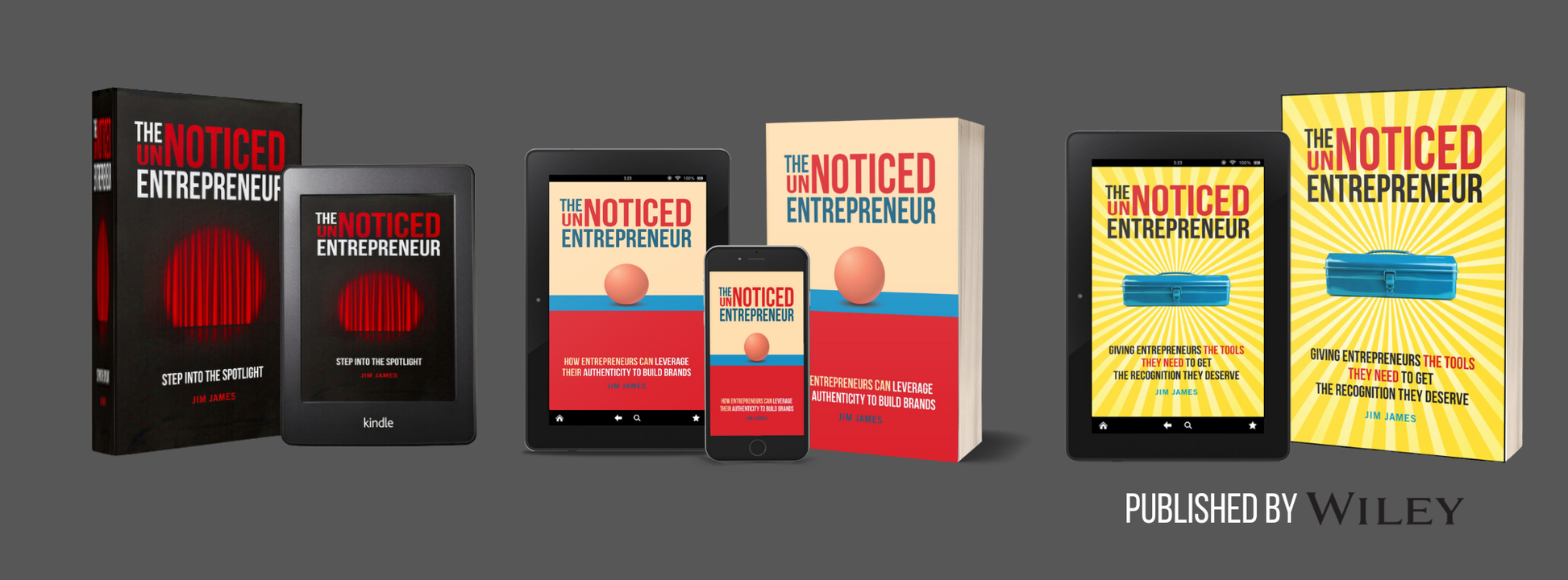
Volume 3 of The UnNoticed Entrepreneur was published by Wiley — the 200-year-old academic and trade publisher listed on the NYSE as WLY. The manuscript didn't start in a Word document. It started as 50 podcast interviews. Here is the exact stack and workflow I used to turn a year of conversations into a finished book, without hiring a ghostwriter and without losing the voice of the guests.
The premise: a podcast is a book in disguise
Most B2B podcasters sit on a goldmine and never mine it. The maths is straightforward. Fifty interviews, averaging 45 minutes each, at roughly 140 words per minute of spoken English, gives you about 315,000 words of raw transcript. Strip out the host — typically 30 to 45 per cent of any interview — and you're left with roughly 175,000 to 220,000 words of pure guest insight. That's the source material. The finished book is 85,000 words. The job isn't writing. The job is curation, structure and rights.
By the numbers
- →50 interviews recorded
- →~45 minutes average length
- →~140 words per minute spoken
- →~315,000 words of raw transcript
- →30–45% of every interview is host talk — cut it
- →85,000 words in the final manuscript
- →4 weeks from first cut to delivered to Wiley
Four weeks. That is the elapsed time from opening the first transcript to handing the finished manuscript to the publisher. Without the stack below it would have been a year, and most of that year would have been spent typing things the guests had already said better.
This is the same logic we apply when we produce shows for clients in the studio — the episode is the atomic unit, but the long-term asset is everything you build on top of it.
The stack, end to end
1. Descript — recording and first-pass editing
Every interview was recorded in Descript. Separate tracks per speaker, studio sound enabled, filler words removed in one click. Descript's transcript-as-timeline editing means I could cut the conversation by deleting sentences in a document — no scrubbing waveforms. That alone saved hours per episode and produced a clean transcript ready for the next step.
2. SwellAI — transcripts and first-draft articles
SwellAI ingested each episode and produced a structured transcript plus a draft long-form article in the guest's voice. I never published the AI article as-is — it was a scaffold. But starting from a 1,500-word draft instead of a blank page is the difference between writing a chapter in an afternoon and writing one in a fortnight.
3. Perplexity — background research and statistics
Every chapter needed context the guest didn't provide: market size, regulatory dates, comparable case studies, the stat that anchored the claim. Perplexity gave me cited answers I could verify in two clicks, rather than ten Google tabs. It is the single tool that most improved the editorial credibility of the book.
4. ChatGPT — pulling the quotes
Once the transcript and the draft chapter existed, I used ChatGPT to surface the three or four sentences from each interview that were genuinely quotable — the ones that would survive being printed on a page without the surrounding conversation. This is a job humans are bad at, because we get attached to context. The model doesn't.
5. Canva — QR codes back to the episodes
Every chapter ends with a QR code generated in Canva, linking back to the original podcast episode. Readers who want the full conversation scan and listen. It turns the book into a top-of-funnel asset for the show, instead of the other way around.
6. Designrr.io — layout and export
Designrr.io took the edited chapters and produced print-ready PDF and EPUB files in the formats Wiley's production team needed. No InDesign licence, no typesetter. For a book that is fundamentally a curated anthology, this is the right level of tooling — heavier software would have added weeks for no reader-visible benefit.
7. Wiley — the publisher
Wiley (NYSE: WLY) picked up the series. Having an established trade publisher on the spine does two things: it lends third-party credibility that no self-published title can buy, and it puts the book into distribution channels — university libraries, airport bookshops, corporate L&D catalogues — that simply aren't available to a Kindle Direct release.
The workflow, in order
- →Record interview in Descript (separate tracks, studio sound on).
- →Export transcript to SwellAI; generate draft article in guest voice.
- →Run Perplexity queries for any stat, date or claim the guest made.
- →Use ChatGPT to extract the 3–4 strongest verbatim quotes.
- →Edit the chapter down to 1,200–1,800 words; preserve guest voice.
- →Generate QR code in Canva linking to the source episode.
- →Pour chapters into Designrr.io; export PDF and EPUB.
- →Hand finished manuscript to Wiley's production team.
What this means for your show
If you are running a B2B podcast and you don't have a plan for the long-tail content, you are leaving the most valuable asset on the table. The episodes are the raw material. The book, the article series, the keynote deck, the lead-magnet — those are the compounding assets. Production quality matters because it is the input. Repurposing matters because it is the output.
If you'd like to see what your show could become — and what it should cost to produce it properly — run the numbers on the cost calculator or talk to us about producing the next volume. We've done it once. We can do it for you.
Brief us on your show.
We produce broadcast-grade podcasts for founders and entrepreneurs. Tell us what you're building and we'll come back with a plan.
Request a briefing